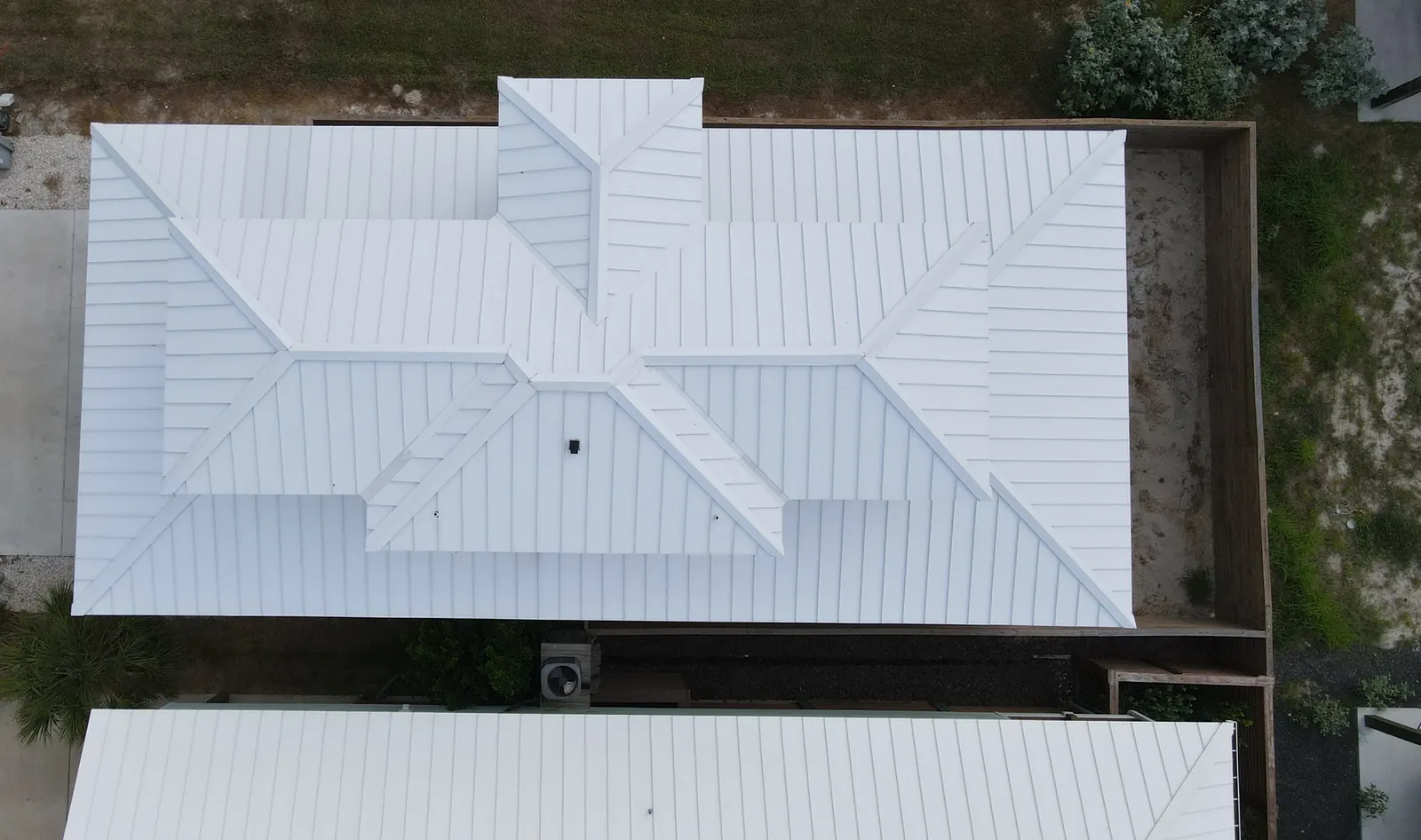
Straight-down drone view of a white standing-seam metal roof on a Paradise Pointe home, hips and valleys meeting at the center

Port Aransas, Texas

Hurricane and storm repair in Port Aransas. The weather is the client.

Storm damage repaired in Port Aransas, on Mustang Island and in Rockport, and the reason it happened fixed. Much of it is insurance work: a TWIA claim and a house to make whole and certify. In business since 2016, building on the island since 2021.

What happens after a storm, in order

Who it’s for

Who calls us, and when.

Most of it is insurance work, and we say so. TWIA had 50,881 policies in Nueces County on March 31, 2026, according to its Q1 2026 Fact Book. A good share of the houses on this island are one of them.

Owners who are somewhere else

In Houston or Austin, looking at a neighbor’s photograph of your roof. You need someone on the island to go and look, tell you what is true, and get a tarp on it this week.

Property managers

Twelve doors and one storm. Each house needs its own photographs, its own claim and its own paperwork, and the owners want to see all of it without driving down.

Insureds with an estimate in hand

The adjuster has been. You have TWIA’s number and need a contractor’s line-item estimate to set beside it, then a repair that leaves the house insurable.

Owners of older houses, before the season

Nothing has happened yet. You want the roof-to-wall straps and the openings looked at while the weather is quiet, because the next one is not a question of if.

Not all of it is storm damage. Rot at a sill, a window that stopped sealing, siding that gave up to salt rather than wind: ordinary wear on this coast comes to this page too, because it is the same trades and, once you touch the envelope, the same paperwork.

A whole-house rework belongs in Remodels & Renovations

Two jobs, in order

Repair, then resilience.

Hurricane Harvey made landfall near Port Aransas on August 25, 2017 as a Category 4 storm with 130 mph winds; city leaders told Texas Standard it damaged 85 percent of the town’s homes and 100 percent of its businesses. Any house here older than that has been through it.

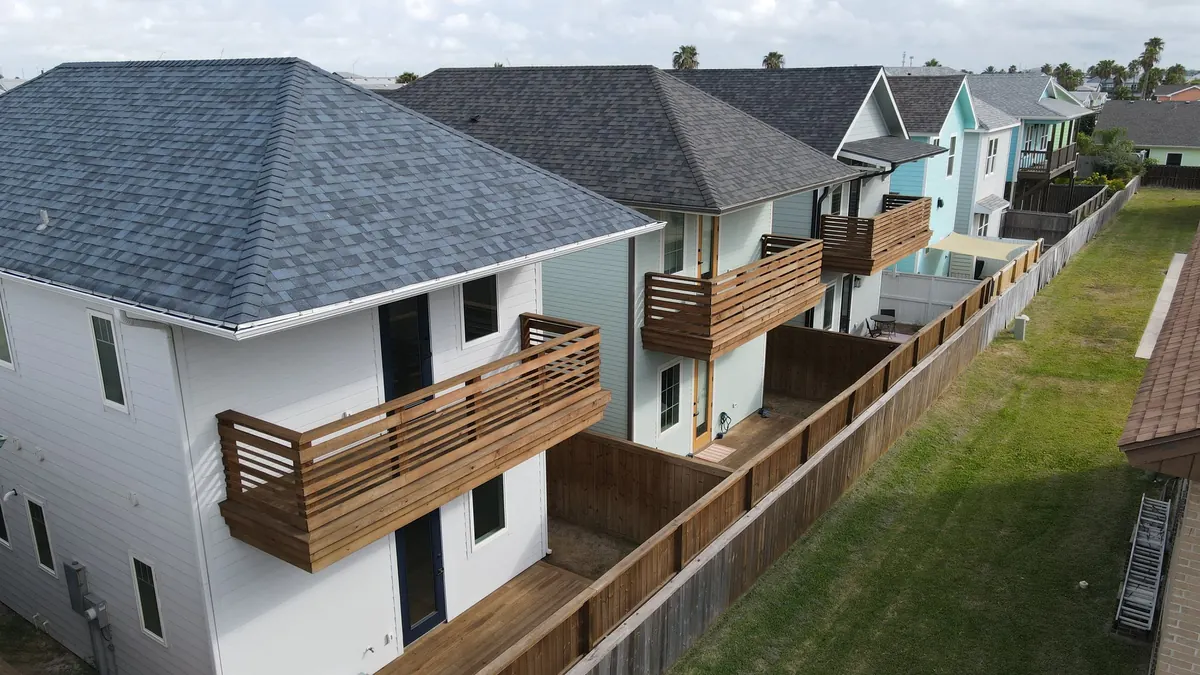
Drone view along the rear of three Nautilus Street houses: architectural shingle hip roofs, cedar balcony rails and a continuous cedar fence

First

Standing again.

Stop the damage getting worse and document it the way an adjuster does. Then a scope, a line-item estimate the insurer can read, and the permanent repair, inspected and certified so the house stays insurable.

  • Every damaged element photographed and dated before anything is moved
  • Temporary weatherproofing: tarps, boarding, drying out
  • A written scope, and a line-item estimate with labor and materials shown separately
  • Permanent repair to roof, openings, siding and structure, with the windstorm inspections booked
  • The certificate and the paid invoices, in your project login
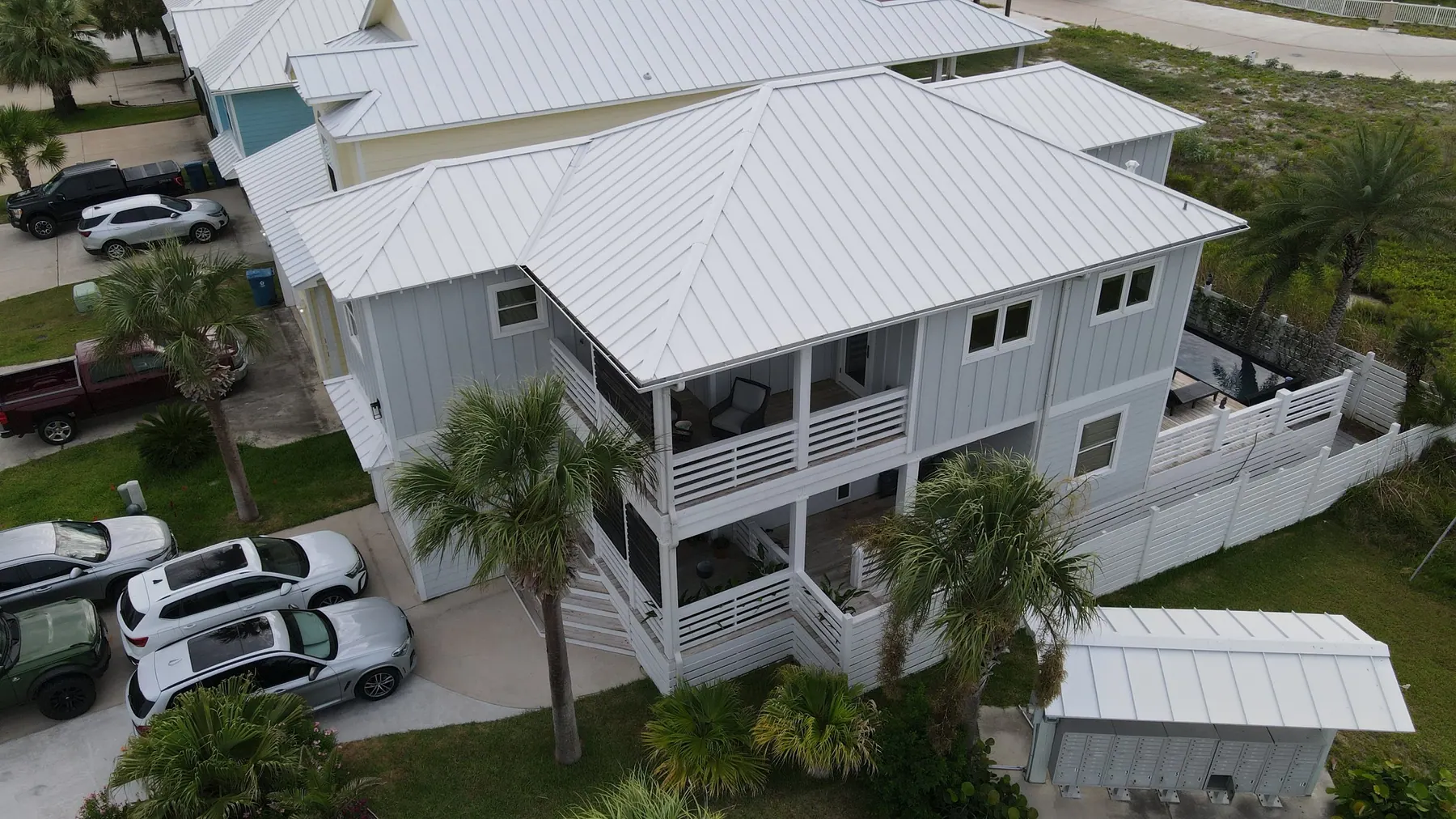
A completed home with a standing-seam metal roof, seen from above

Then

Harder to damage next time.

A storm repair opens the house up. While it is open, the connections the last builder skipped go in for the cost of the hardware and an afternoon. Insurance puts back what was there; the resilience work is yours to choose, priced on its own line.

  • Roof-to-wall straps and wall-to-floor ties where they were never installed
  • Impact-rated windows and doors in place of unrated glass
  • Roof deck re-nailed to the engineer’s pattern before it is covered again
  • 316 stainless or G185 hot-dip galvanized hardware in place of what corroded
  • Mechanical equipment raised above the flood line

The claim

What happens, in what order.

TWIA’s sequence, from its own claims pages. A private wind policy runs on similar lines; check yours. TWIA covers wind and hail; flood is a separate policy and a separate claim.

01

Report the claim

TWIA policyholders have one year from the date of damage to report a claim. Report it first, before repairs and before us. Flood damage is not covered by a TWIA policy; that goes to your flood insurer.

Who You, to TWIA or your agent. A claims examiner is assigned.

You keep The claim number and the examiner’s name.

02

Temporary repairs, receipts kept

Tarp, board, dry out, remove wet drywall. TWIA expects this and reimburses receipts on a covered loss. Stop there: no permanent repairs until the examiner has discussed the claim with you. Temporary repairs need no windstorm certificate.

Who You, or a contractor on your behalf. We can do it and keep the receipts the way TWIA wants them.

You keep Photographs before and after the temporary work, and every receipt.

03

Adjuster’s inspection and TWIA’s estimate

An adjuster inspects and TWIA writes its own estimate. Once it has what it asked for, TWIA has 60 days to accept or reject the claim. It helps if someone who knows the house is there when the adjuster is.

Who TWIA’s adjuster and claims examiner.

You keep TWIA’s written estimate and its coverage decision.

04

A line-item contractor estimate

TWIA asks for contractor estimates with labor and materials line by line, not a lump sum. A cost-plus estimate is already that shape. TWIA compares it with its own and can pay a supplement where ours is justified.

Who Us, for the estimate; TWIA’s examiner, for the comparison. You remain the policyholder; we do not negotiate the claim for you.

You keep Our estimate, and later the same numbers as invoices in your project login.

05

Permanent repairs, inspected and certified

Once coverage is accepted and the paperwork is in, TWIA has 10 days to pay. Roof, opening, siding and structural repairs are then inspected for the windstorm code and certified; without one, TWIA says, the structure “may be considered ineligible for coverage.”

Who A TDI-appointed windstorm inspector or a Texas-licensed engineer, during the work.

You keep The WPI-8, the paid invoices, and photographs of every connection before it was covered.

Sources: TWIA, claims; TWIA, recovery; TWIA, contractor estimates; TWIA, repairs and certification

Island rules that apply

Which rules apply to storm repairs in Port Aransas?

Nearly everything a storm breaks is on the list that triggers a windstorm inspection. Each rule leaves you a document, and the insurer and the next buyer will ask for all of them.

  1. 01

    Windstorm certificate for the repair

    Replacing or significantly repairing a roof, replacing windows, entry doors or garage doors, re-siding a significant portion of a wall, and rebuilding decks or patio covers all require a windstorm certificate of compliance. Painting, plumbing and electrical repairs, fences, gutters and temporary repairs after a storm do not. The application goes to the Texas Department of Insurance before the permanent work starts.

    Checked by

    A TDI-appointed windstorm inspector during the work, or a Texas-licensed engineer afterward. TDI has issued every certificate since June 1, 2020.

    You keep

    The WPI-8 (or a WPI-8-E for completed work inspected by an engineer). Without it, TWIA says the structure may be considered ineligible for coverage.

    Source: TWIA, windstorm certification

  2. 02

    Substantial damage: the 50 percent rule

    If the cost to repair equals or exceeds 50 percent of the structure’s market value before the damage, land excluded, the building counts as substantially damaged and must be brought up to current flood code, which on this island usually means raising it. Where flood caused the damage, an NFIP policy carries up to $30,000 of Increased Cost of Compliance coverage toward that.

    Checked by

    The City of Port Aransas floodplain administrator makes the determination.

    You keep

    The substantial damage determination, either way. It matters to your flood policy and to any later permit.

    Source: FEMA, the 50 percent rule

  3. 03

    Elevation certificate, if the floor comes up

    If the repair raises the building or replaces the floor framing, its height is measured against the base flood elevation and recorded on FEMA’s elevation certificate, with photographs. In a V zone the measurement is to the lowest horizontal structural member.

    Checked by

    A Texas-licensed surveyor, engineer or architect, on FEMA’s form.

    You keep

    The elevation certificate. Your flood premium is priced from it.

    Source: FEMA, elevation certificate FAQ

  4. 04

    City permit and inspections

    Structural, electrical, plumbing and mechanical repairs take a City of Port Aransas building permit, and the contractor has to be registered with the city. Windstorm inspections are separate from the city’s.

    Checked by

    The City of Port Aransas building official.

    You keep

    The permit and the inspection record.

  5. 05

    Engineered connections above 115 mph

    Where the design wind speed is above 115 mph, which includes this coast, the connections in the continuous load path are determined by a licensed structural engineer rather than read from a prescriptive table. That applies to a retrofit as much as to a new house.

    Checked by

    A Texas-licensed structural engineer specifies; the windstorm inspector checks the work against the specification.

    You keep

    The engineer’s connection schedule, and the record of what went in where.

    Source: Building America Solution Center, continuous load path

Storm work

Storm work, and why there are few photographs of it.

Repairs are the least photographed work a builder does, and the ones done for an insurer belong to the owner, so we do not publish addresses. What we can show is how the work is done: the same five links, the same certificates, the same open book as a new house.

Every repair

Photographs of every damaged element before it is moved, a line-item estimate with labor and materials separated, the permanent repair inspected for the WPI-8, and the certificate in your login at the end.

See the five links

Fixings & finishes

Fixings and finishes that survive salt air.

On this coast the fastener fails before the wood does, and FEMA’s Technical Bulletin 8 (June 2019) says why: salt spray drives accelerated corrosion of metal connectors to about 3,000 feet landward of the shoreline, with elevated rates seen 5 to 10 miles inland. Most of Mustang Island is inside the first band, and all of it is inside the second.

So the hardware is named, not described. Type 316 stainless rather than 304 where it matters, hot-dip galvanized to G185 or thicker where the engineer allows it, and corrosion-resistant fasteners in every piece of treated lumber, which the 2018 International Residential Code (R317.3.1) requires anyway. The bulletin’s other finding is the reason this page exists: structural failures occur at the connections, not in the members.

Why the grade is on the invoice

The materials we build with

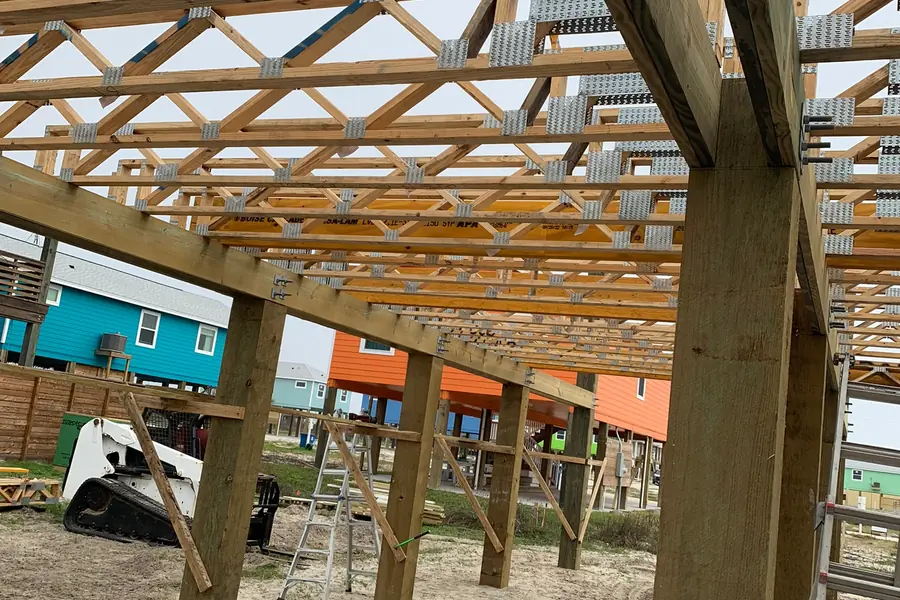
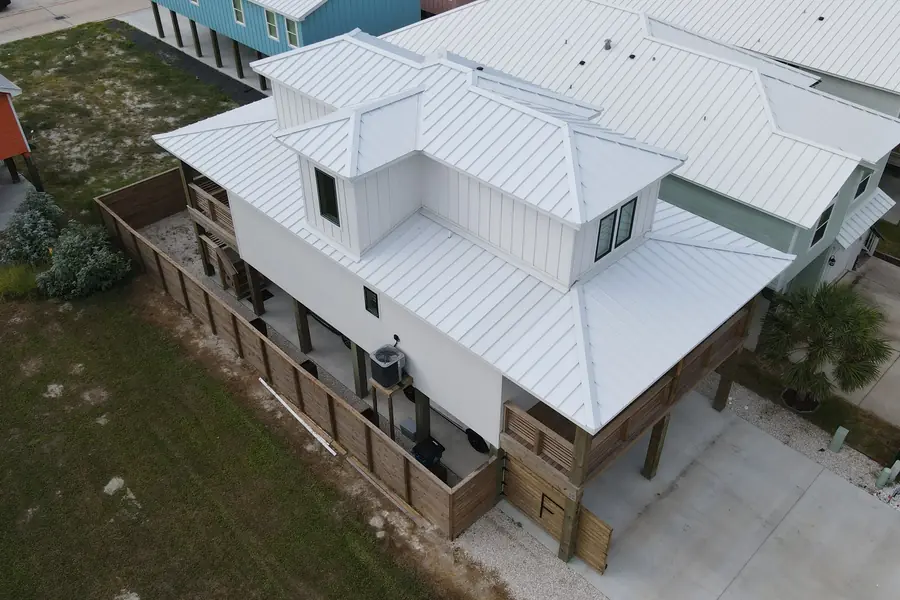
334 Paradise Pointe in January 2023: timber pilings, beams bolted to the piles and the floor framing going on, before any wall goes up The same house finished, seen from above: raised on those pilings under a white standing-seam metal roof

Cost & who pays

What does storm repair cost, and who pays?

On a covered claim, the insurer pays to put back what was there, less your deductible. The resilience work is yours, and it sits on its own line so you can decide about it with the number in front of you.

Line by linethe estimate TWIA asks for: labor and materials shown separately

Insurance estimate

1 yrfrom the damage to report a TWIA claim

Reporting window

60 + 10days: TWIA to decide, then to pay

TWIA’s clock

Same book, this kind of job.

An insurance repair is contracted the way everything else here is: the actual cost of the work plus a stated fee, every invoice visible the week it lands. It happens to be exactly the shape TWIA asks for, labor and materials line by line, so the ledger you see is the estimate the examiner sees. If the work turns out to cost more than TWIA allowed, the invoices are the evidence for a supplemental payment.

How the open book works

Example build Storm repair Example view

Cost to date

$412,880

Contract total

$486,000

85% drawn to date

85%

Recent line items on the example project
DateVendorCategoryAmount
12 Aug Coastal Lumber Co. Framing package $18,420
09 Aug Gulf Coast Concrete Pilings and caps $24,150
02 Aug Island Glazing Impact-rated windows $31,700
28 Jul Marine Electric Rough-in $9,860
21 Jul Structural Hardware Tie-downs and straps $4,215

Every invoice lands here the week it is raised.

Questions

Questions owners ask after a storm.

About claims, certificates and the load path, answered plainly.

Report the claim, make temporary repairs, and stop there. TWIA policyholders have one year from the date of damage to report; tarping, boarding, drying out and removing wet drywall are expected of you and the receipts are reimbursable if the loss is covered. Do not start permanent repairs until a TWIA claims examiner has discussed the claim with you. Photograph everything before you move it.

Yes; a lot of our storm work is insurance work. We document the damage the way an adjuster documents it, and we write the line-item estimate TWIA asks for, labor and materials separately. TWIA compares it with its own and can issue a supplemental payment where ours is justified. You remain the policyholder; we do not negotiate the claim on your behalf.

If it touches the roof, windows, doors, siding or structure, yes. TWIA says many structural repairs must be certified by a TDI-appointed inspector or a Texas-licensed engineer, and without a certificate the structure may be considered ineligible for coverage. Temporary repairs after a storm are exempt. The application goes to the Texas Department of Insurance before the permanent work starts, and we file it.

Not the insurer, the city. If the cost to repair equals or exceeds 50 percent of the structure’s pre-damage market value, land excluded, FEMA’s substantial-damage rule requires the building to be brought into flood compliance, which on this island usually means elevating it. The city’s floodplain administrator makes the call. When flood caused the damage, an NFIP policy carries up to $30,000 of Increased Cost of Compliance coverage toward it.

A continuous load path: roof sheathing to framing, roof to wall, wall to floor, floor to foundation, with the openings protected. Each link is a specific connector, and in hurricane-prone regions, where the design wind speed is above 115 mph, which includes this coast, an engineer specifies them. Without the roof-to-wall strap, the roof is the sail. The drawing on this page shows the five links and what proves each was done.

Because 316 carries molybdenum, which resists the chloride pitting that fastener suppliers report 304 suffering within a year of coastal exposure. FEMA’s Technical Bulletin 8 finds salt-spray corrosion strongest within about 3,000 feet of the shoreline, with accelerated rates 5 to 10 miles inland, and recommends Type 304 or 316 stainless or G185 hot-dip galvanizing for connectors. Most of Mustang Island sits inside that first band, so we choose the grade that has the margin.

The first visit is quick: we are on the island, two miles away, and temporary weatherproofing comes first. How fast the permanent work follows depends on access to the island after the storm, materials, and the claim: it waits for the examiner’s go-ahead and, for envelope work, the windstorm inspection schedule. We tell you the sequence on the first day.

Yes, as of September 2026. A TWIA board committee voted 2 to 1 on September 2, 2026 against a proposal to exclude about 53,620 non-owner-occupied coastal policies, shelving it for this legislative cycle. Nueces and Galveston Counties hold nearly 60 percent of TWIA’s second-home policies. A windstorm certificate on every certified repair is what keeps a house eligible whatever happens next session.

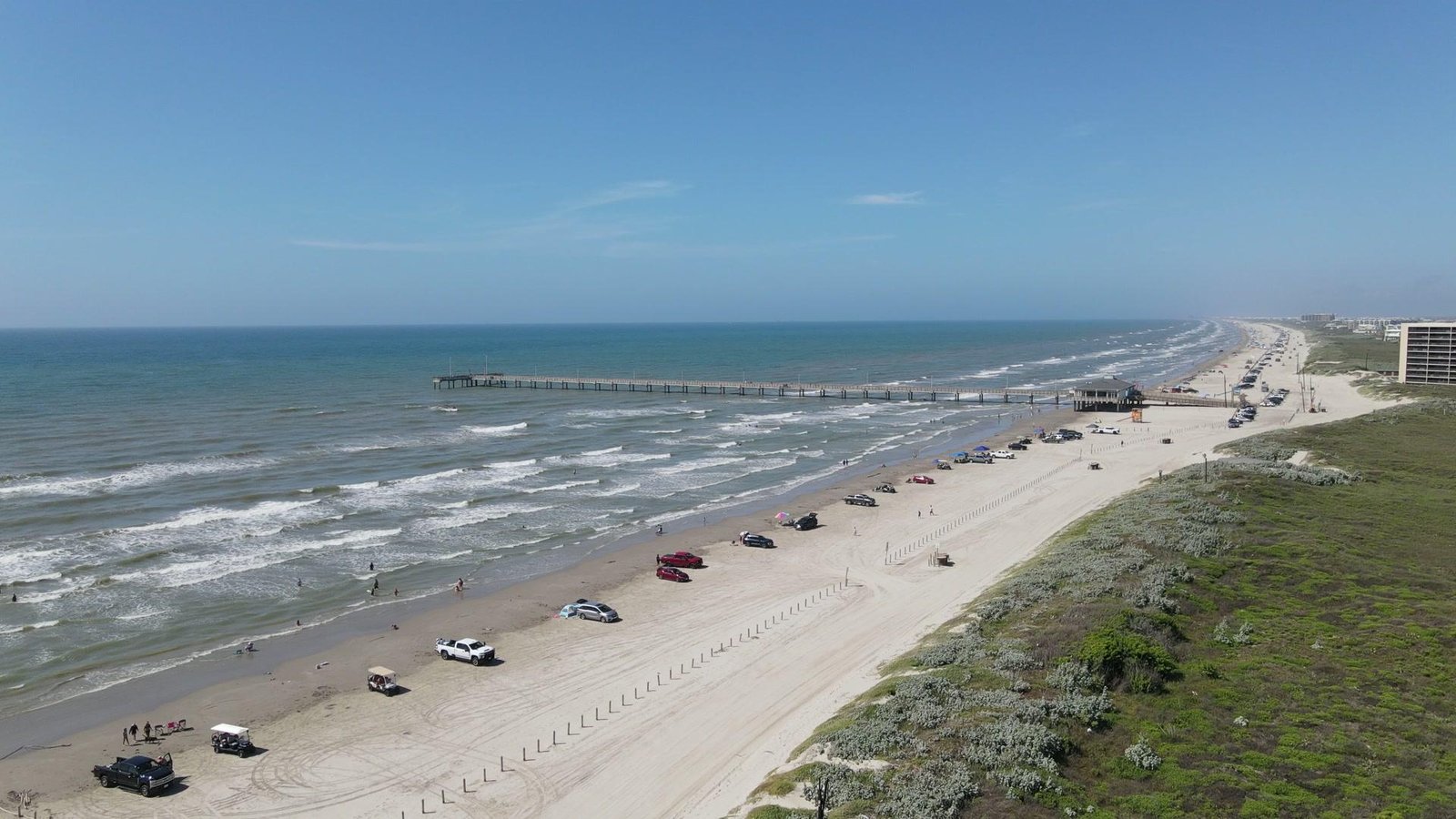
The Port Aransas beach and fishing pier from the air

Standing again, then stronger.

Send photographs and the address. If a claim is open, tell us where it stands. You will have the sequence, in order, on the first call.

How the open book works

Example build Custom home · Mustang Island Example View
Contract total
$486,000
Cost to date
$412,880

85% drawn to date

Remaining
$73,120
Open change orders
3

85% drawn to date

$412,880 of $486,000

Where the money has gone

  • Sitework and piles 15.0% $61,930
  • Framing and structure 23.8% $98,450
  • Envelope and roofing 18.0% $74,205
  • Windows and doors 12.8% $52,760
  • Mechanical, electrical, plumbing 14.1% $58,340
  • Interior finishes 10.9% $44,890
  • Permits and engineering 5.4% $22,305

Seven categories, $412,880. Adds up to the cost to date above.

Stage

  1. Conversation
  2. Feasibility
  3. Design
  4. Build
  5. Handover

Next up

Dry-in inspection, then interior finishes. The schedule and every photograph land in the same place as the invoices.

Recent invoices View all

DateVendorCategoryAmount
15 Aug Bayfront Roofing Standing seam roof $27,480
12 Aug Coastal Lumber Co. Framing package $18,420
09 Aug Gulf Coast Concrete Pilings and caps $24,150
06 Aug Mustang Millwork Interior doors and trim $12,640
02 Aug Island Glazing Impact-rated windows $31,700
30 Jul Coastal Plumbing Rough-in and fixtures $15,905
28 Jul Marine Electric Rough-in $9,860
24 Jul Island Insulation Closed-cell foam $8,720
21 Jul Structural Hardware Tie-downs and straps $4,215

Every invoice lands here the week it is raised. The figures on this screen are an illustration, not a real project.