
01
The drawings say 316 stainless. A 304 strap costs less and looks the same.
You see the invoice either way, so a cheaper substitution cannot become our profit.

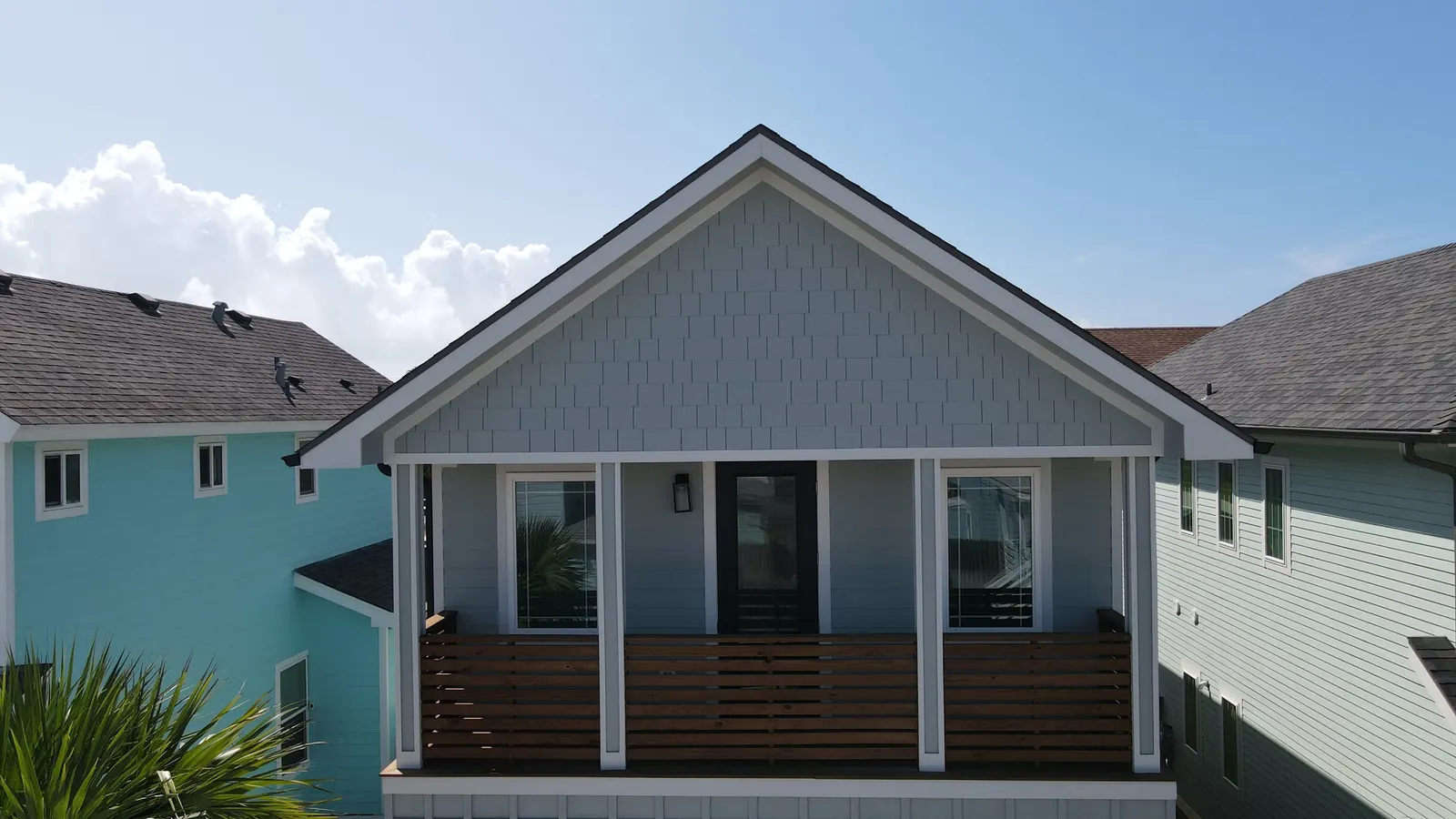
Mustang Island, Texas
You pay the actual cost of the work plus a stated fee, and you see every invoice the week it lands. That is the whole contract, on a new house on pilings, a 1940s cottage, a kitchen or a roof after a storm.
What cost-plus is
Cost-plus means you pay what the work actually costs, materials, labor, subcontractors, permits and inspections, plus a stated fee for running the job. Open book means every one of those invoices is visible to you, not just the total.
Every Hearth & Haus job is contracted this way. It is not a tier or an option; it is how the firm works, on a new build and on a storm repair alike. Most of our clients live somewhere else, in Houston, Austin, San Antonio or Dallas, and a contract they can check from a phone is the only kind that makes sense for them. It happens to be the only kind that makes sense for us too.
The register below is the short version. The rest of the page is the long one: what counts as cost, what the fee is for, where a dollar goes, what you see each week, and what happens when something changes.
The formula
What you pay is the cost of the work plus the fee. The terms sound obvious. They are where cost-plus contracts go wrong, so here is what each one means on ours.
Whether the fee is a percentage or a fixed sum matters less than whether you can see it. A fee you can see is a fee you can compare.
Follow a dollar
Four of the five are cost, passed through at the invoice price. The fifth is the fee, and it is the one a fixed price would have hidden inside the other four.
Cost+Fee=What you pay
Illustration, not a quote. On your job the ledger shows the real split, by category, every week.
For national context: construction costs made up 64.4 percent of a new home’s sales price in 2024, the highest share since the survey began in 1998, with the finished lot at 13.7 percent and builder profit at 11.0 percent, according to the National Association of Home Builders’ Cost of Constructing a Home in 2024. Within construction cost, the same survey put interior finishes at 24.1 percent, major system rough-ins at 19.2, framing at 16.6, exterior finishes at 13.4, foundations at 10.5 and site work at 7.6.
Those are averages for production builders selling finished houses, not our numbers. A cost-plus job on a lot you already own has no lot line and no marketing line in it, and on this coast the foundation and the openings run well above the national share. The point of the bar is not the proportions; it is that you get to see them.
What a week looks like
Not at the end of the month, and not as a summary. The vendor’s bill, entered against its category, beside the photographs from the same week.
Open it on a phone in Houston and you see the same book we keep on our side of the desk.
The card beside this is an example with made-up figures. Open it to see the full view, the way it looks on a screen.
Cost to date
$412,880
Contract total
$486,000
85% drawn to date
85%
| Date | Vendor | Category | Amount |
|---|---|---|---|
| 12 Aug | Coastal Lumber Co. | Framing package | $18,420 |
| 09 Aug | Gulf Coast Concrete | Pilings and caps | $24,150 |
| 02 Aug | Island Glazing | Impact-rated windows | $31,700 |
| 28 Jul | Marine Electric | Rough-in | $9,860 |
| 21 Jul | Structural Hardware | Tie-downs and straps | $4,215 |
Every invoice lands here the week it is raised.
When a spec changes
Specs change for three reasons: we find something behind a wall or in the ground, you ask for something different, or a specified product is unavailable. The contract decides who benefits from each. Here is each one under both forms.
01
You see the invoice either way, so a cheaper substitution cannot become our profit.
02
A change you ask for is priced at the vendor’s number, plus the fee, and you approve it before it is ordered.
03
We tell you what we found before we tell you what it costs, so a found problem cannot hide until the end.
Two things hold this together. The drawings name products rather than describe them, so “316 stainless” is a checkable line and not a category the cheapest part can hide in. And you approve each change before it is bought, so the ledger never shows you something you did not agree to.
The Remodels page shows what a found list looks like on a real kind of job: what we found, what we decided, what it cost.
Why we do it
In business since 2016, building on the island since 2021, thirteen builds, all of them contracted this way.

“I’m building a business here and it’s not going anywhere. I’m not just a GC that’s in town doing side work, and then I get a house built and then I disappear.”
Most of our clients are three hours away when the invoices come in. An open book is how they know what is happening without driving down, and a builder whose office is two miles from every job has no reason to hide a number.
Questions
About cost-plus, the fee, the invoices and paying. Answered plainly.
You pay the actual cost of the work, meaning materials, labor, subcontractors, permits and inspections, plus a fee to the builder for running the job. The fee is stated before anything is ordered. What makes ours open-book is that every underlying invoice is visible to you, not just the total, so there is no marked-up number to take on trust.
The fee is set for your job before anything is ordered and written into the contract. It covers running the job: Carl on site, scheduling and supervision, the office, the project login and the warranty. For context, one Texas builder, Zbranek & Holt, describes cost-plus fees as “typically 12% – 18% depending upon the difficulty of the job.” The number is not the point; the visibility is. A fee you can see is a fee you can compare.
Every material invoice, subcontractor bill and labor cost lands in your project login the week it is raised, next to the schedule and the site photographs. There is no marked-up line to take on trust. It also removes the temptation: under a fixed price, every cheaper substitution is builder profit; under open-book cost-plus there is nothing to gain from thinning a spec, because you see the invoice either way.
The risk moves rather than disappears. A fixed price is only fixed until the first change order and the first allowance overrun, and it pays the builder to substitute quietly. Cost-plus puts the number in your hands with the invoices to check it. We name products in the drawings, so the estimate is checkable before you commit, and you approve every change before it is bought.
You know before it happens, because the ledger shows cost to date against the estimate every week, by category. Overruns here come from things found behind walls or in the ground; we tell you what we found before we tell you what it costs, and you decide. How the fee behaves when costs move is written into the contract, so it is settled before you sign.
On the schedule in your contract, and always against work you have already seen. Invoices reach you the week they are raised, so each payment is against work photographed and itemized in the ledger, not against a milestone description written before the work existed. If a bank is financing the build, we work to its draw schedule and inspections.
The actual invoices, as they arrive. The example ledger on this page shows the level of detail: date, vendor, category and amount for every line, grouped into cost categories, with cost to date against the estimate. A summary asks you to trust the arithmetic; the invoices let you do it yourself.
Yes, every job, whatever its size. It is the way the firm is contracted, not an option on the menu. For insurance-scope repairs the same ledger doubles as the documentation the Texas Windstorm Insurance Association asks policyholders for: TWIA wants contractor estimates that break labor and material costs down line by line rather than as a lump sum, and that is how ours are kept anyway.
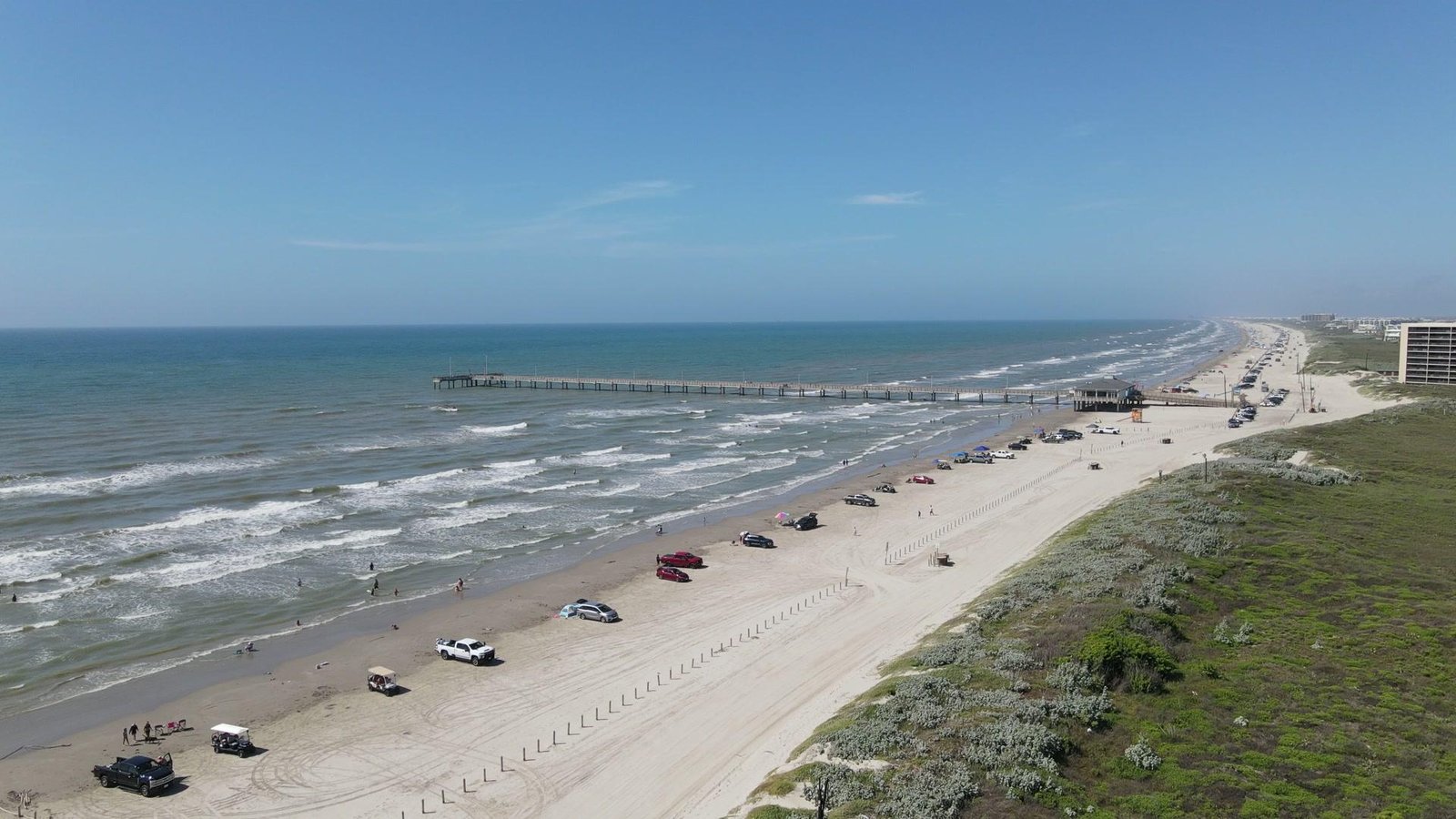
A new house, a cottage, a kitchen or a roof after a storm. Tell us which, and the first conversation starts the same way: what you want, what it costs here, and whether we are the right firm for it.